
The key to choosing car seat ventilation and heating is not simply checking whether the feature is available. You also need to consider whether the seat material’s breathability, the heating and ventilation technology, the safety design, and the actual use scenario are a good match. In cold regions, seat heating should be prioritized. In hot and humid climates, suction-type seat ventilation is the better choice. For areas with four distinct seasons, it is recommended to choose an OEM seat system that offers both ventilation and heating. Compared with aftermarket retrofits, OEM systems are generally more reliable in terms of safety, airbag compatibility, and overall user experience.
Table of Contents
In automotive comfort configurations, car seat ventilation and heating functions are spreading from high-end models to the mainstream market. These two technologies have become the core solutions for tackling that whole freezing-in-winter, sweating-in-summer headache by accurately controlling the temperature and humidity of the seat surface. But here’s the thing: the actual experience can vary a lot depending on materials, the tech under the hood, and the different modes you get. So, you really gotta think about your local climate, how you actually use the car, and what you’re willing to spend before jumping in.
Car Seat Material selection: the balance between breathability and durability
The car seat material directly affects the conduction efficiency of ventilation and heating and the long-term user experience. Leather seats have become the mainstream choice of mid-to high-end models because of their high-end texture and ease of cleaning, but their natural dense structure often leads to poor breathability. To get around this, higher-end models basically perforate the leather—tiny holes, usually around 0.8 to 1.2 mm across. That way you get decent airflow without weakening the leather too much. For example, the honeycomb perforated design of Mercedes-Benz E-Class seats, combined with a suction ventilation system, can reduce the seat surface temperature from 60°C to below 32°C after the car has been sitting in the sun in 10 minutes.
Although the breathability of fabric seats is better than that of genuine leather, the material has strong hygroscopicity and is easy to leave sweat stains, and it is easy to breed mold after long-term use. Some models use blending technology to improve durability, such as the waterproof fabric used in Toyota Camry, which maintains breathability while providing splash resistance, making it suitable for users in hot and humid areas. Suede material (such as Alcantara) achieves a balance of breathability and warmth through microfiber structure. It feels soft to the touch when heated in winter, but the ventilation effect is slightly inferior to that of punched leather.
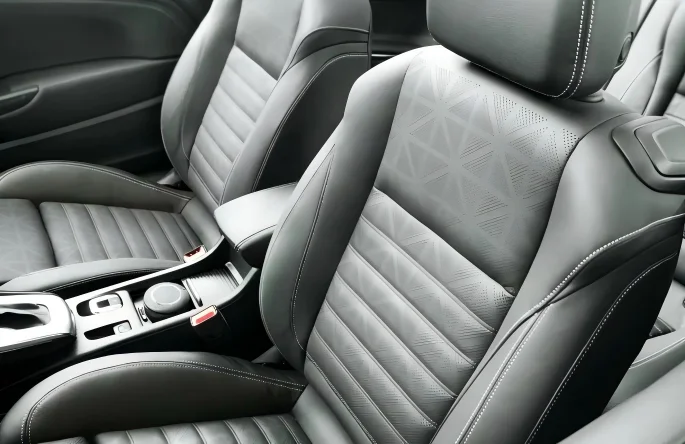
Car Seat Heating function: detailed consideration of three-level temperature control and safety design
Seat heating provides temperature adjustment through electric heating elements embedded in the seat cushion and backrest. The mainstream technology is divided into resistance wire and carbon fiber. The cost of resistance wire is low, but the uniformity of temperature rise is poor, and it is prone to local overheating. The thickness of carbon fiber heating film is only 0.2mm, the heating speed is increased by 30%, and it supports zoned temperature control. For example, the heating system of Audi A6L uses carbon fiber heating elements, supporting independent adjustment of the backrest and seat cushion. The low temperature gear (35-40℃) is suitable for long-term use, and the high temperature gear (above 50℃) can quickly dispel cold in a -20℃ environment.
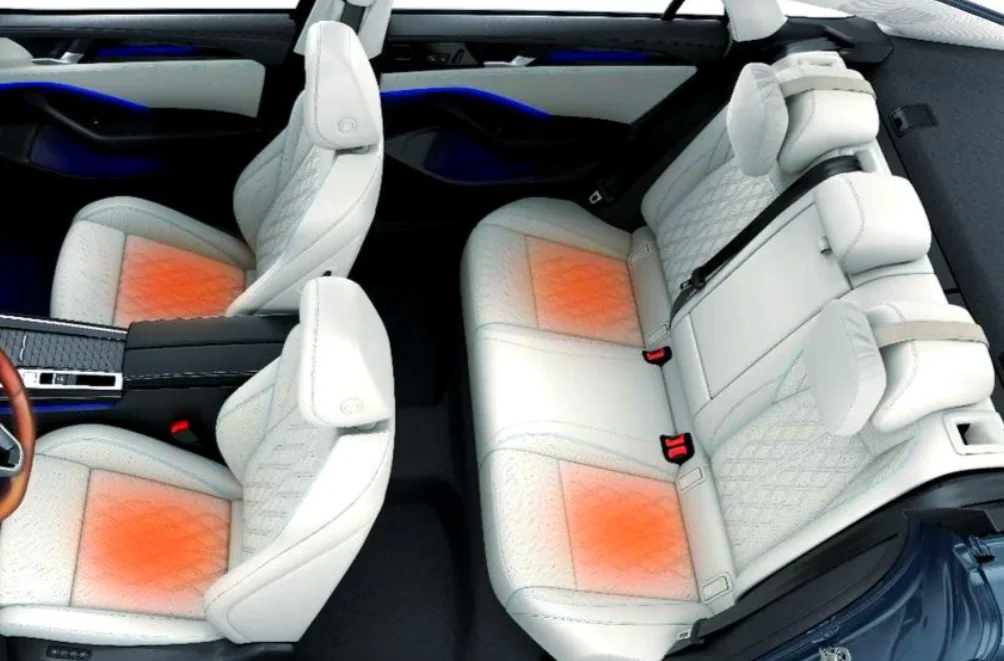
1. Gear selection strategy
Low temperature gear (blue logo): The power is about 15-20W, suitable for early winter or when there is heating in the car, with low energy consumption and to avoid overheating and sweating.
Medium temperature range (yellow mark): power 30-40W, preferred for environments below 0℃, can reach a warm state within 2 minutes, balancing comfort and energy consumption.
High temperature gear (red mark): the power exceeds 50W, only for short-term use in extreme cold or when your body is chilled, and attention should be paid to prevent low-temperature burns.
2. Tips for safe use
Due to the limitations of battery management systems for new energy vehicles, it is recommended to give priority to seat heating rather than air conditioning heating in winter to extend driving range.
Avoid laying heavy cushions or blankets on seats, which may affect heat conduction and cause potential safety hazards.
When the vehicle is parked for a long time, turn off the heating function to prevent the battery from losing power.
Car Seat Ventilation function: Blowing vs. Suction – The Experience Divide
Seat ventilation drives air flow through a fan, which is divided into two technical paths: blowing type and suction type. The air-blowing type directly blows the outside air toward the human body, and the cooling speed is fast but the wind force is uneven, which is easy to cause local discomfort; The air suction type pumps out hot and humid air through negative pressure, resulting in a gentler feel and noise levels over 30% lower, and has become the mainstream scheme of mid-to high-end models.
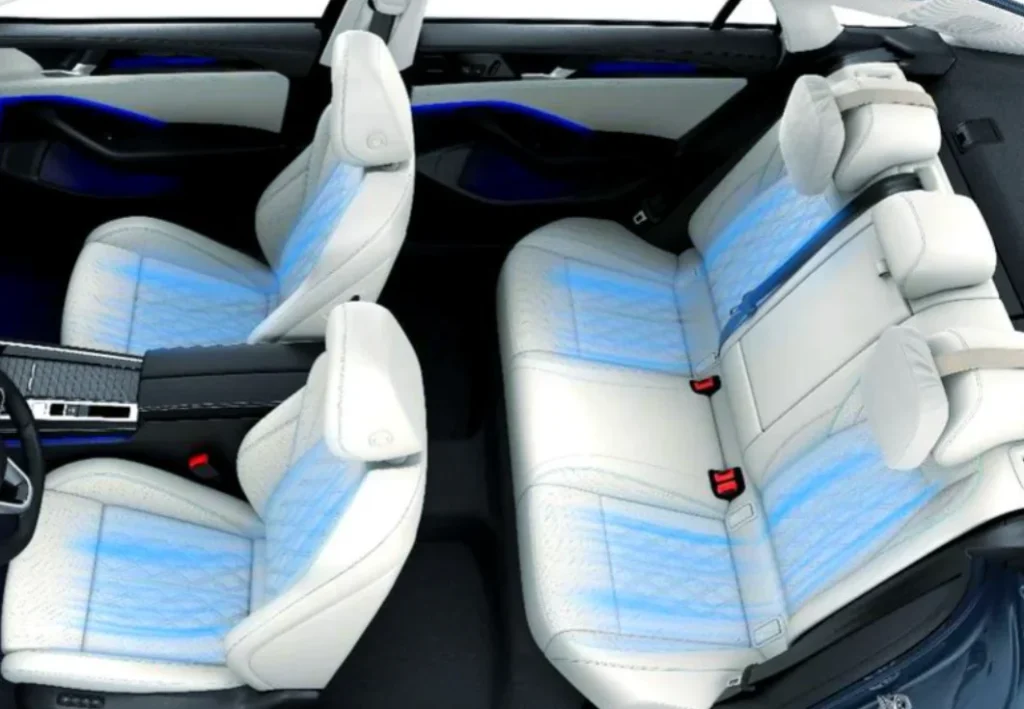
Typical Scenarios
After high temperature exposure: the air suction system works with the air conditioning cold air circulation, which can reduce the seat surface temperature by 8-10℃ and cut back sweat by 65% within 15 minutes. For example, the “intelligent vortex fan” adopted by BMW 5 Series can automatically adjust the air volume according to humidity sensor data to avoid excessive cooling.
During long-distance driving: Continuous ventilation can maintain the temperature difference between the contact surface and the core body temperature at 5-8℃, which conforms to the ergonomic comfort zone. Some models are equipped with a “sleep mode” that operates at low wind speeds to reduce noise, such as the Lexus ES’s silent ventilation system, which has a noise value of just 38 decibels, close to a library environment.
Humid Environment: Ventilation function inhibits mold growth and extends seat life. Testing revealed that leather seats with ventilation aged 40 percent less after five years than unventilated models.
Functional mode combination: Suggestions for configuration of different scenarios
Cold regions
Priority is given to the heating function, which can be paired with steering wheel heating to form a “warm triangle”. For example, the heating system of Volvo XC90 supports three-zone independent control of backrest, seat cushion and steering wheel, and the whole body warms up within 10 minutes in a -15℃ environment. If the budget is limited, you can buy carbon fiber heated seat cushions with a power of only 20W that can reach 40℃ in 5 minutes.
Hot and humid areas
Suction ventilation is a must-have. It is recommended to choose the model with the number of fans ≥4 and the coverage rate of ventilation area exceeding 70%. For example, the seat ventilation system of Tesla Model Y is designed with double air ducts, with an air circulation of up to 20 cubic meters per hour, which can quickly reduce the body temperature when used with air conditioning. If the vehicle was not equipped with ventilation from the factory, perforated leather seat cushion can be installed, but it is necessary to confirm whether the seat frame structure supports modification.
Regions with Four Seasons
The original dual-function configuration is recommended, and ventilation can be turned on separately to remove seat moisture in spring and autumn. For example, Volkswagen Magotan’s “climate seat” system supports the linkage of heating and ventilation, automatically switches modes according to ambient temperature, and the energy consumption optimization rate reaches 25%.
Buying Guide: Avoiding Pitfalls – The Quality Gap Between Factory and Aftermarket
The original configuration has significant advantages in seal integrity, system compatibility and safety. For example, the seat ventilation system of Mercedes-Benz is linked with the airbag ECU to cut off the fan power within 0.01 seconds during a collision to avoid secondary injury. Although the cost of aftermarket modification is low (350-850 USD), there are risks such as damaging the seat frame and affecting the pop-up angle of the side airbag. If modification is necessary, you need to select TS16949-certified accessories and have them installed by professional technicians.
Cost-effective options
Budget pick: Look for fabric seat models with heating, such as the Toyota Corolla, for better winter comfort than unheated leather car seats.
Mid-range pick: Choose the factory optional ventilation system (from 1400 USD), such as the 24-way electrically adjustable car seat of Lincoln Navigator, which supports the linkage of ventilation, heating and massage.
High-end experience: “Intelligent temperature-controlled seats” of high-end models, such as the ENERGIZING comfort system of Mercedes-Benz S-Class, can be combined with navigation data to pre-heat or pre-cool the seats in advance, enabling seamless connection across the whole scenario.
Car seat ventilation and heating have changed from “luxury configuration” to a core element of enhancing ride quality. Consumers need to move past the “spec-sheet-only” mindset and choose a scheme with mature technology and optimized experience according to their own needs, so as to truly enjoy the comfortable travel of “warm in winter and cool in summer”.
Key Takeaways
- Match the system to your climate
Cold regions should prioritize heating; hot and humid areas need suction ventilation; four-season regions benefit most from factory heating + ventilation. - Seat material affects performance
Perforated leather balances luxury and airflow, fabric breathes well but absorbs moisture, and Alcantara feels warm but ventilates less effectively. - Carbon fiber heating is better
It heats faster, more evenly, and supports zoned control. Use low heat for long drives, medium heat for freezing weather, and high heat only briefly. - Suction ventilation offers better comfort
Compared with blowing systems, suction ventilation removes heat and moisture more gently, with lower noise and less direct wind discomfort. - Factory systems are safer
OEM ventilation/heating systems integrate better with airbags, electronics, and seat structure, while aftermarket upgrades may create safety risks. - Look beyond the spec sheet
Comfort depends on material quality, airflow coverage, fan noise, temperature control, safety design, and installation quality.