Table of Contents
Today we’re not talking fluff. I’m going to show you a freshly completed commercial vehicle interior upgrade case. Honestly, after seeing the finished result in person, I stood there stunned for a few seconds. Turns out, a set of properly executed detail craftsmanship can really lift an ordinary commercial vehicle cockpit straight into another dimension.
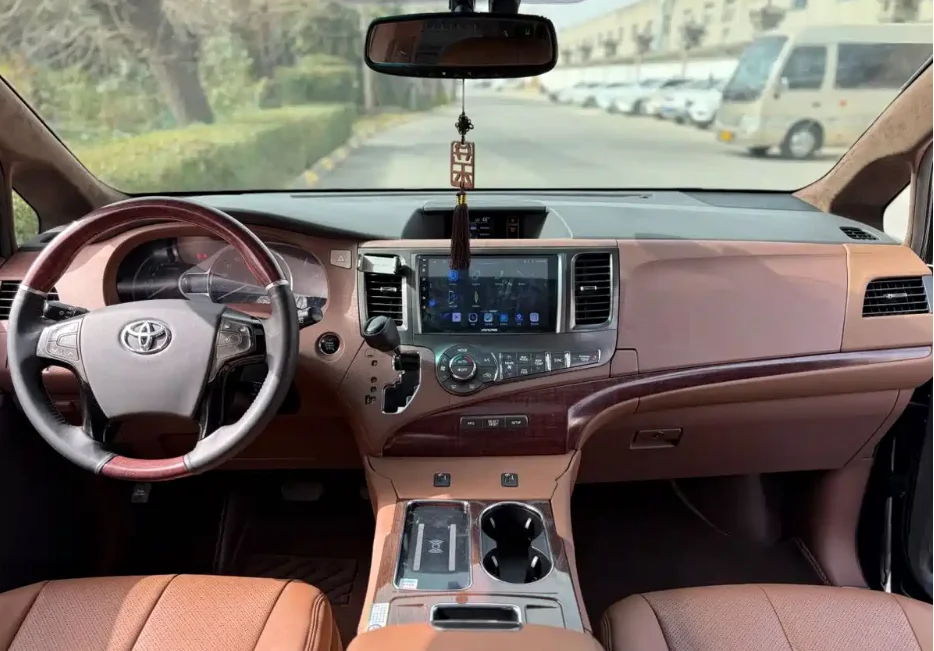
First, let’s set the stage. When we’re out on business, the space in the car has long ceased to be just a means of transportation. It’s the face of the enterprise, and it’s also the second space where you and your guests spend the entire journey. Frankly, the factory interior can only guarantee that you have a place to sit, but wanting it to be luxurious, comfortable, and personalized all at once is basically unrealistic. That’s why customized interior modification, especially the details that truly test one’s skill, like seat quilting and door panel embossing, has become the key to elevating the class. YUNZEE plays with the ultimate pursuit of details. The custom cockpits they’ve built for numerous car owners before have always delivered on texture and practicality. Today’s caramel brown main theme scheme is a concentrated expression of their craft strength.
Car Seat Quilting: Comfortable and Good-Looking Was Never an Either/Or Choice
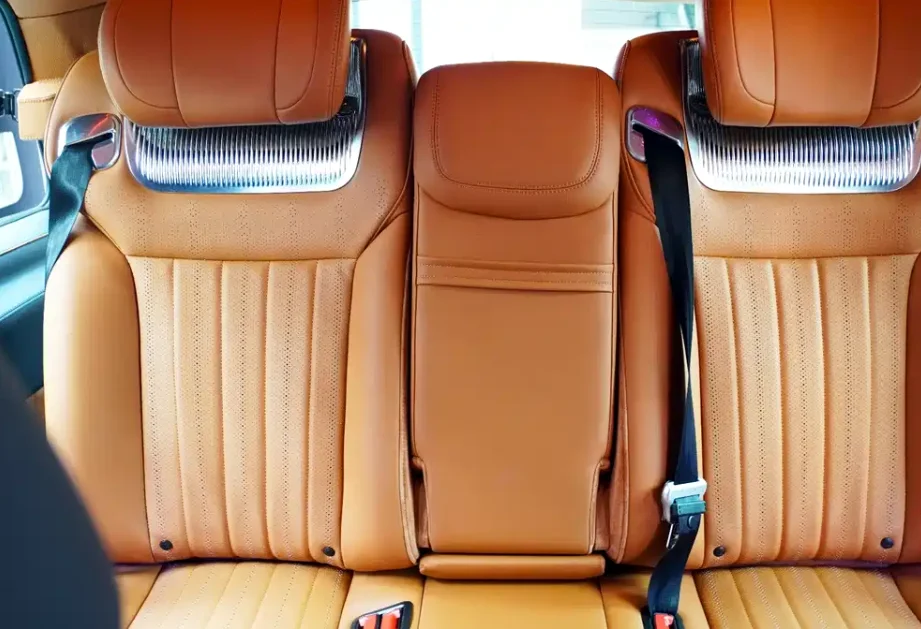
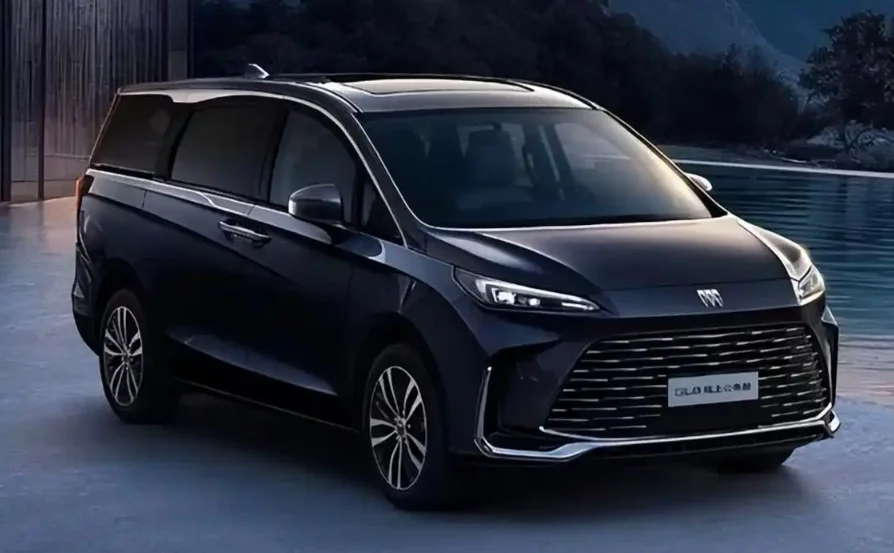
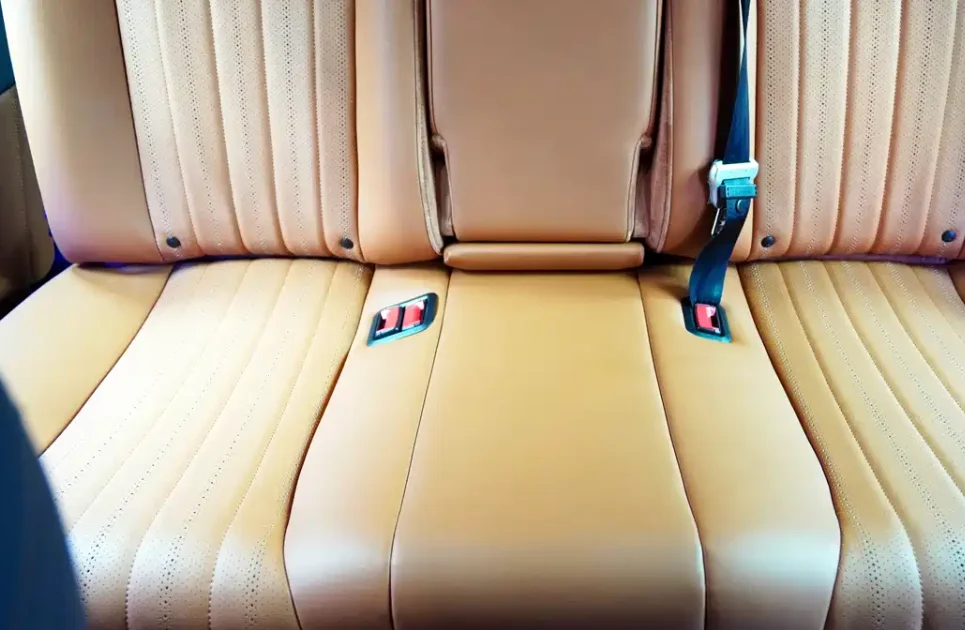
The car seat is the component you touch the most and use the most heavily in the car. Whether a long trip works out or not is entirely down to it. This time, the classic vertical strip quilting plus high-density perforated leather has always been highly popular on the modification list of popular models such as GL8 and Sienna.
Let’s take a closer look at how the craft is executed. As soon as the lines of vertical quilting are applied, the old-school texture that luxury cars should have immediately comes out, and the tension of the lines themselves can stretch the leather surface more three-dimensionally, so it won’t look boring like a large flat panel. The team has been producing seats and accessories for commercial vehicles for many years. When working on cars like the Mercedes-Benz Vito, the spacing and tension of quilting are controlled very tightly, and the seats won’t collapse or deform after being sat in for a long time. Regarding the perforation, fine holes were evenly punched into the quilted leather surface, and the breathability was directly elevated to a higher level. Combined with the ventilation function of the seats, the stuffy, sticky-back feeling you get on long distances in summer can be significantly reduced. For cars like the Granvia, which need to handle both client pickups and family duties, this scheme just perfectly balances comfort and practicality. A flat and unquilted section of plain leather has been deliberately left in the middle of the seat cushion, and the quilted areas on both sides offer a restrained contrast, so that the contact surface beneath you is smoother, and the seat’s overall shape gains more depth.
To give you guys a bit of insight, quilting is really not just for good looks. Those stitches genuinely lock the sponge filling underneath in place, preventing it from shifting or collapsing over time. That’s how the seat’s lifespan is extended. The regular lines can also maintain the tension of the leather surface, meaning fewer wrinkles, so the car still looks sharp after several years. Perforated leather with quilting, where the structure is not compromised yet breathability is maximized, is the mainstream approach for upgrading commercial vehicle luxury seats right now. In the projects we handle, this dual-purpose craft route that delivers on both looks and function has been consistently followed.
Door Panel Embossed Wrapping: That High-End Feel, It All Leaks Out from These Places
Inside the car, besides the seat, the door panel has the largest surface area and demands the most craft. This time, a combination of blue and orange contrasting colors and exclusive embossing was applied directly, making the door panel interior highly recognizable. Even for new energy commercial vehicles like the DHT-PHEV, this set of ideas is completely workable.
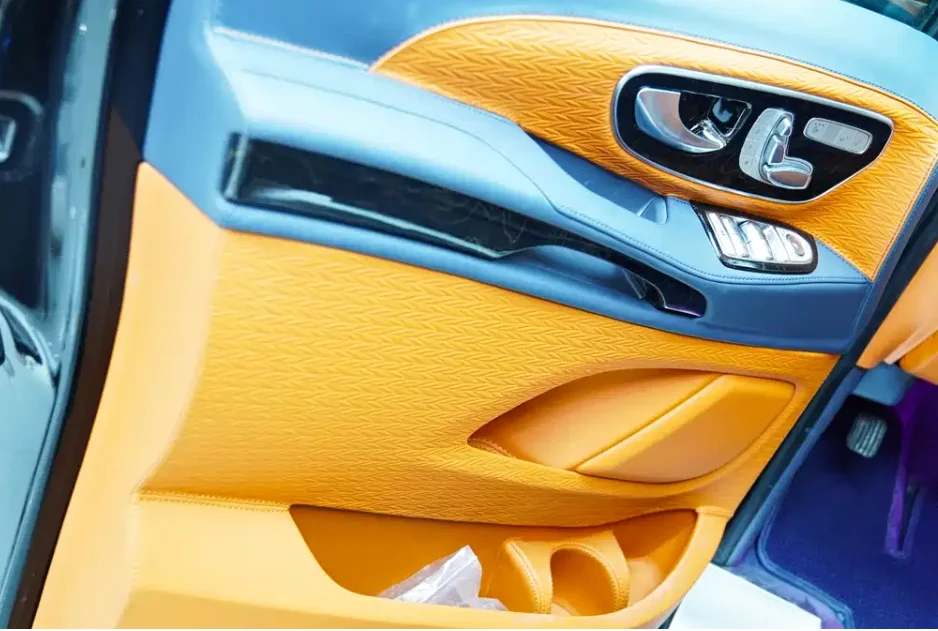
How was it executed? The upper half is a quiet haze blue, and the lower half is caramel orange. When these two colors touch, the heavy, stuffy feel of the all-brown interior is immediately broken, while also echoing the main color of the seats, achieving a harmonious yet dynamic look. The exact color match depends on the original interior base of the car, so for something like the Mercedes-Benz Vito, a more subdued route would be taken. The main body of the door panel features embossed leather with a woven texture. Compared with ordinary glossy leather, it has more tactile character, looks more upscale, and doesn’t readily show scratches and fingerprints. For a car like the GL8, which runs on the road every day, it being dirt-resistant and easy to wipe down is real peace of mind.
Here’s the key point: this door panel upgrade didn’t touch the window switches, door handles, or storage compartments of the original car, achieving a completely non-destructive wrap. It looks handsome, and usability isn’t compromised. We do all commercial vehicle modification projects while strictly adhering to this bottom line of non-destructive modification. The original factory function and warranty remain untouched.
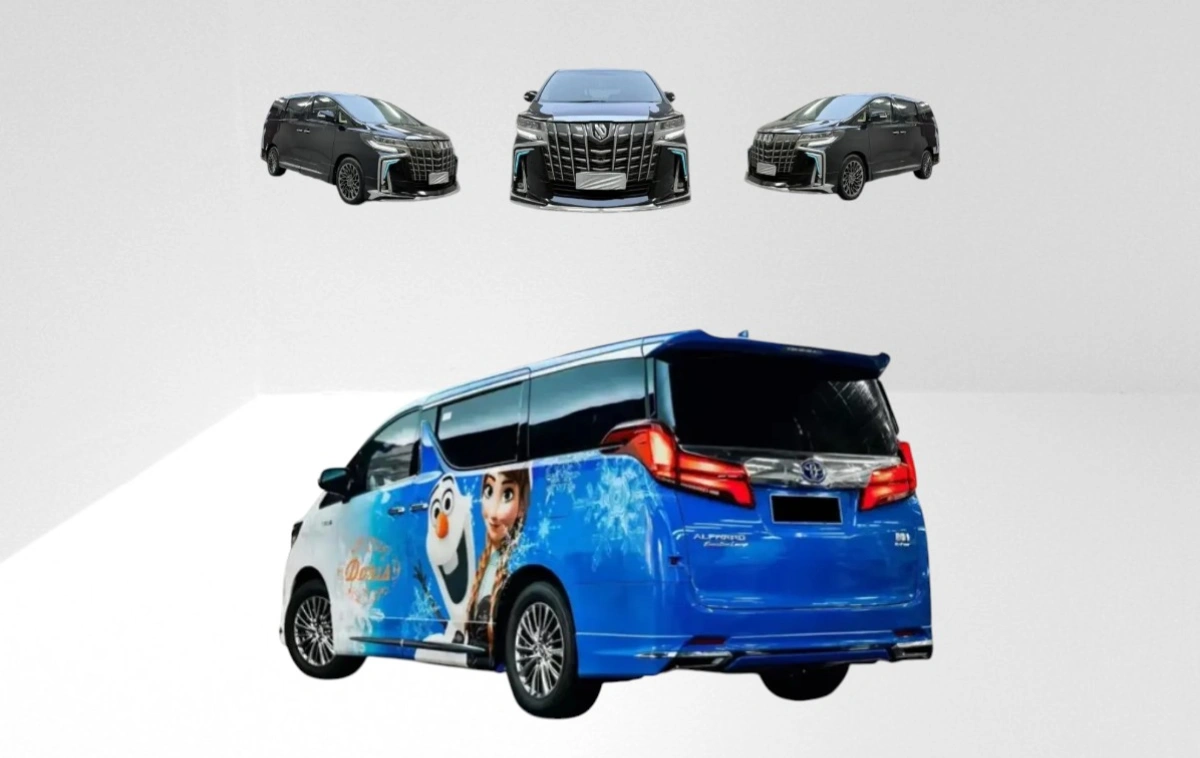
Let me also give you guys some insight into embossed wrapping. The texture on the surface of embossed leather can effectively conceal the minor scratches and wear from daily use, making it much more stain-resistant than glossy leather, and easier to clean too. It’s perfectly suited for the high-frequency use scenario of commercial vehicles. Moreover, embossing is applied by mold at the time of leather production. Compared to manual pressing after the fact, the texture is more uniform and longer-lasting, with no issue of peeling or fading over time. Two-tone wrapping is an even greater test of a technician’s skill. If the pattern cutting and splicing are even slightly off, leaving uneven stitching and gaps at the edges, it shows immediately. Our technicians are all systematically trained. On the door panel wrapping of Sienna and Granvia, the stitching error can be controlled within one millimeter.
What’s the Real Value of a Cockpit Upgrade Like This?
After the whole thing is done, it’s not about looks, but it’s definitely not just about looks. This is about finding a balance between aesthetics, comfort, and practicality:
In terms of texture, when the quilted seats and embossed door panels are in place, an originally plain cockpit immediately becomes refined. The sense of ceremony for business reception is elevated quite substantially. In terms of experience, the perforated leather improves breathability, and the quilting optimizes support, so it’s not so easy to get tired on those long hauls. In terms of durability, quality leather plus rigorous work makes the whole thing more wear-resistant and anti-aging, genuinely extending the service life. In terms of personalization, how to combine the colors and choose the craftsmanship all comes down to your own preferences and driving habits. What you end up with is a space that’s exclusively yours.
For a new energy commercial vehicle like DHT-PHEV, YUNZEE will adjust the process scheme according to the interior characteristics of the electric vehicle, ensuring that the technological feel remains intact and the sense of luxury holds up after the modification.
A Final Few Words
The most fascinating part of commercial vehicle interior modification lies in those inconspicuous details. When you execute the work of quilting and embossing properly, and truly master the art of color matching, an ordinary commercial vehicle cockpit can be slowly refined into a dignified and premium mobile space. True high-end customization is never about relying on a bunch of flashy things, but about polishing every detail you can see and touch to perfection.