
A “good” car seat is defined by robust mechanical fundamentals—safety, ergonomics, durability, and NVH (noise control)—rather than superficial features like massage or heating. True comfort stems from precise pressure distribution and rigorous engineering validation (like 65,000-cycle durability tests), ensuring the seat remains silent and supportive for a decade. Features are bonuses; rock-solid engineering is the prerequisite.
Table of Contents
Cost Breakdown of Car Seats: From Manufacturing to Raw Materials Three factors account for the majority of vehicle seat expenses: material costs (about 60%), which include frames, foam, and upholstery; smart devices (20–30%), which include heating and ventilation systems; and hidden manufacturing costs (10–20%), which include R&D and safety testing.
| Category | Share | Components Included | Key Cost Drivers & Technical Impact |
| Material Costs | ~ 60% | Frame, foam, and upholstery | Determines the foundational safety, ergonomics, and perceived quality. Material utilization and metallurgy are major variables. |
| Smart Devices & Electronics | 20% – 30% | Heating/ventilation systems, pneumatic massage bladders, individual ECUs, wiring harnesses, side airbags | Evolved from luxury options to commonplace standards. Adds assembly complexity and increases per-seat cost by $30 – $100. |
| Hidden Manufacturing Costs | 10% – 20% | R&D, engineering, safety testing, delivery, and logistics | High upfront investment (CAD modeling, FEA simulations, destructive crash tests). Logistics cost is driven by non-compressible bulk volume. |
Why Does Automotive Seat Cost Breakdown matter?
It is possible to determine the cost range and use data to negotiate the seat price by dissecting the auto seat price. Customers can comprehend the manufacturer’s capacity to fabricate car seats by knowing the approximate cost of the raw materials and manufacturing costs. Additionally, it is possible to safeguard the margins from arbitrary price increases in order to establish a transparent and equitable partnership.
Additionally, the producers can examine the budget allocation by knowing the components of the auto seat price. In order to execute value engineering and lower the auto seat price at the best possible consideration, it is possible to balance quality and cost efficiency by understanding the composition of the auto seat price.
The Cost Structure Analysis of a Vehicle Seat
The modern car seat is a sophisticated system of intelligence, comfort, and safety rather than just a mechanical part.
| Component Group | Material Option | Cost Profile | Utilization / Waste Rate | Pros, Cons & Application Scenarios |
| Upholstery & Covers (20% – 30% of BOM) | Fabric & Textile | Most economical choice | Excellent durability | Features great breathability. Recycled polyester options gain traction but draw a green premium during procurement. |
| ~ | Vegan Leather (PU/PVC) | Mid-range cost, excellent value | Over 90% material utilization | Delivered in uniform rolls, making CNC automatic cutting highly efficient and minimizing cutting waste. Perfect for mid-range vehicles. |
| ~ | Genuine Leather | Very high cost (3x – 5x more per yard than fabric) | 30% – 40% high waste rate | Natural flaws cause high scrap rates during cutting. Exclusively applied to high-end premium and luxury seats. |
| Foam Padding (10% – 15% of Material Cost) | Hot-Molded Foam | Lower cost base | Standard baseline | Standard process; lower resistance to sagging and shorter fatigue life over time. |
| ~ | High-Resiliency Cold-Cure Foam | 20% – 30% more expensive | Performance driver | Provides superior sag resistance and density. Offers outstanding ergonomic support and retains shape for more than 10 years. |
| ~ | Mixed Density Optimization | Saves 5% – 10% of total foam expenses | Strategic placement | Uses high-quality foam only in core body contact zones and cheaper foam elsewhere, cutting weight/cost without sacrificing tactile comfort. |
| Seat Frame (20% – 30% of BOM) | Stamped Steel | Cheapest structural option | Heavier mass weight | Lacks weight efficiency but offers the lowest initial entry cost. |
| ~ | High-Strength Steel (HSS) | Industry standard standard | Optimal price/weight ratio | Provides excellent structural rigidity while slightly optimizing overall frame weight. |
| ~ | Aluminum & Magnesium Alloys | High cost (approx. 1.5x more than steel) | Reduces 20% – 30% structural weight | High requirements in casting and welding increase costs sharply, but the weight reduction extends Electric Vehicle (EV) driving range. |
Key Cost: Frame, Foam, and Upholstery
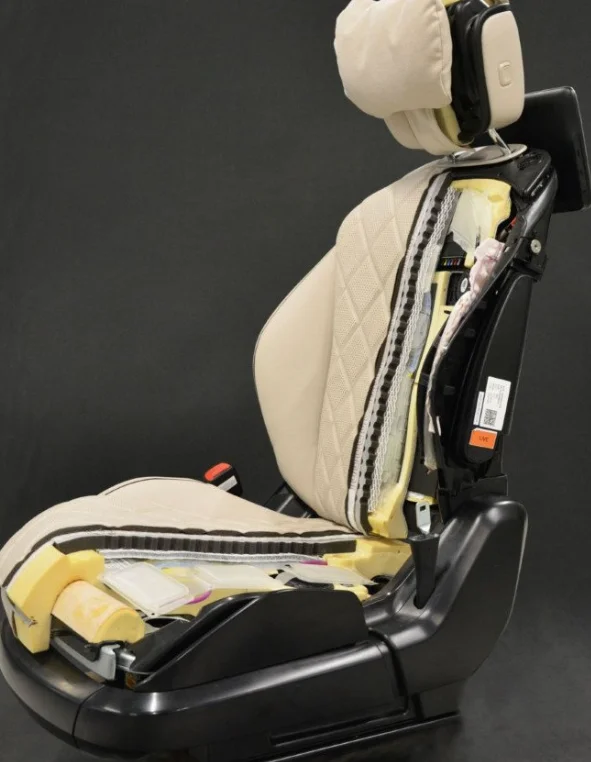
These three components, which also make up the conventional seat construction, account for at least 60% of the manufacture costs of automobile seats. Depending on the materials and budgetary parts, the price of each component may change.
- Frame — Structural seat frame balances rigidity with weight.
- Foam — Foam: Invisible foam offers ergonomics and comfort.
Upholstery — The choice of fabric, synthetic polymers, or real leather for upholstery can affect both the price and the user experience.
The rising third: smart devices and sensors
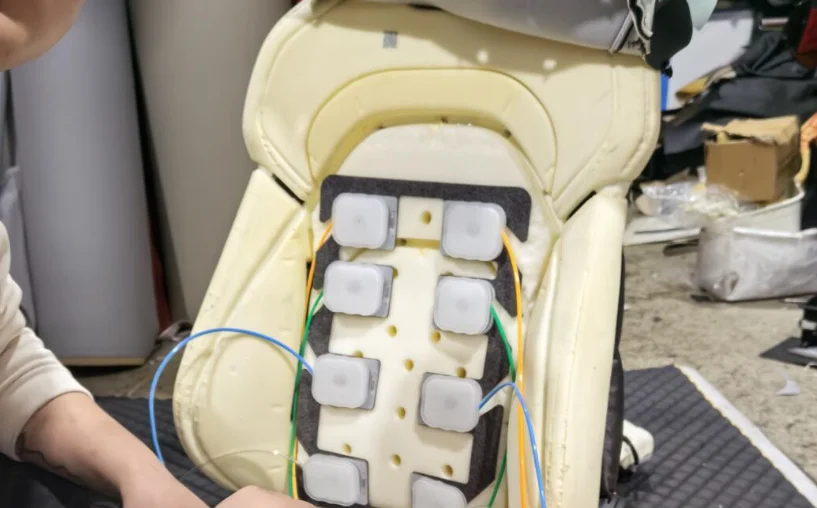
The electronic sensors in car seats are growing rapidly. In order to provide intelligent comfort and convenience, almost all contemporary automobile seats have electrical or smart sensors and motorization. With a 20–30% investment share, these amenities have evolved from being opulent to being commonplace in contemporary automobile seats.
Hidden Cost: R&D, Testing, Delivery
There are unseen costs associated with the production of seats in addition to the tangible components. The entire cost of a car seat varies due to these unpredictable costs.
- lR&D and engineering — high value yet long-lasting effects.
- lSafety Testing — Destructive sled tests are part of safety testing, and each repetition can cost thousands of dollars.
- lDelivery & Logistics — Delivery of bulk and non-compressible seats requires a recurring cost.
Raw Material Cost Breakdown: Quality Vs Cost Efficiency
Occupying the major cost, different raw materials partially decide the balance between perceived quality and the bottom line.
Upholstery & Seat Covers
Because of its intricate sewing technique and material loss, the cover is sometimes the most costly item in the bill of materials (20%–30%). The quiet killer of profit margins is the use of materials.
The most economical choice is fabric and textile, which has the amazing qualities of excellent durability and breathability. In recent years, recycled polyester fabrics have also begun to acquire some traction; nevertheless, they are more expensive due to the green premium they draw throughout the procurement process.
Vegan leather (PU/PVC) is delivered in uniform rolls, making CNC cutting simple and maximizing waste reduction with over 90% material usage. Great-end synthetics are a fantastic option for the majority of mid-range vehicle seats since they can provide the tactile feel and great durability of Nappa leather.
Although genuine leather is nearly three to five times more expensive per yard than cloth, its inherent flaws result in a significant waste rate of 30% to 40%, which raises the price. It is always applied to high-end and luxurious seats.
Cost of foam padding
Foam costs, which make up between 10% and 15% of the total material cost, are sensitive to the price of chemical raw materials. The cost of materials like polyurethane foam fluctuates the most because of changes in the price of crude oil worldwide.
Although it costs 20% to 30% more than hold-molded foam, the high-resiliency cold-cure foam is the superior option. This is due to the fact that it will have higher sage resistance and density, which will offer outstanding support and maintain its shape for more than ten years.
Without sacrificing the end-user experience, businesses can utilize high-quality foams in locations where there is body contact and less expensive foams in other areas. This lowers the overall weight and expense of foam by around 5% to 10% without compromising tactile comfort.
Seat frame cost
As the most critical component for safety, the frame’s cost depends on the metallurgy and it occupies about 20%-30% investment in the bill of material.
Stamped steel is the cheapest option but lacks weight. For automotive seats, high-strength steel (HSS) is the norm in the industry as it provides the best rigidity and slightly reduces the weight so as to provide the best price/weight ratio. Aluminum and magnesium alloys are lightweight to reduce 20%-30% structural weight and extend EV range, but the high requirements in casting and welding increase the frame’s material cost by almost 1.5 times compared to steel.
Impact of Smart Electronics on Seat Price
The integration of electronics is the main reason that the average auto seat price has increased over the past few years. Meanwhile, as smart electronics prevail, the smart car seats will be the standard features in the automotive industry.
Comfort modules such as multi-stage heating, integrated cooling fans for ventilation, and pneumatic massage bladders are in high demand in retail. These have individual ECU and wiring harness requirements, which add complexity to the build process and increase the cost by around $30-$100.
Side-impact safety Air bag are precisely integrated directly into the seat bolster. The cost not only covers the airbag module itself, but the tear-seam technology in the upholstery to ensure the airbag deploys in under 10 seconds.
Manufacturing Cost Breakdown: The Invisible Investment
Effective car seat fabrication is the key to separating the profitable and struggling manufacturers. Those invisible manufacturing costs can cover 15%-20% in the total expenses.
| Dimension | Process / Operation Focus | Advanced Technology & Optimization Methods | Cost-Benefit & Risk Mitigation Impact |
| R&D & Engineering | CAD Modeling & Finite Element Analysis (FEA) | Engineers perform digital crash simulations to study frame deformation at high speeds. Upfront engineering labor is high. | Significantly reduces the number of actual scrapped physical prototype seats during destructive crash testing, cutting overall cycle cost. |
| Advanced Processes | CNC Precision Material Cutting | Automated computer numerical control cutting profiles cover materials with extreme precision to minimize edge wastage. | Improves upholstery cover utilization by 10% – 20%, which is highly critical for price compatibility in large bulk orders. |
| ~ | CMT (Cold Metal Transfer) Welding | Faster and cooler welding technique compared to traditional methods, enabling the use of thinner, lighter steel frames. | Reduces structural and processing costs by 5% – 10% without sacrificing any structural load capacity. |
| Testing & Compliance | Global Certifications & Destructive Testing | Mandatory compliance with global standards (CCC, ECE, FMVSS). Physical sled tests cost thousands per run; losses are allocated to mass production. | Ensures the frame and headrest protect passengers perfectly. Strict compliance with IATF and ISO frameworks drastically lowers product recall risks and defect rates. |
| Delivery & Logistics | Localized Near-Plant Assembly | Bulky, non-compressible assembled seats require heavy-duty, expensive protective crating. Factories are strategically set near vehicle assembly lines. | Minimizes transit damage risks to near-zero and avoids astronomical long-distance freight fees. |
| ~ | Semi-Knocked Down (SKD) Shipping | For international markets, structural components are shipped unassembled and final assembly is performed in the destination country. | Optimizes cargo container space efficiency by 2 to 3 times, saving approximately 50% or more on international ocean freight fees. |
R&D & Engineering
R&D cost is actually an upfront investment cost. When designing or customizing a car seat, engineers need to make a CAD modeling and perform FEA to analyze the deformation of the frame when it collides with something while running at high speed. Though the manual cost is high, it actually reduces the cost of scrapped car seats in the crash testing. A new car seat can last for a long time, meaning it is responsible for incurring the cost in the future.
Advanced Manufacturing Processes
Automation helped in the development of manufacturing processes to ensure efficiency and cost-effectiveness in the wasting of materials. For instance, the CNC cutter crops the materials with a high level of precision, improving the utilization of the covers for 10%-20%. This plays a great role in cost control and price compatibility, especially for large volume orders.
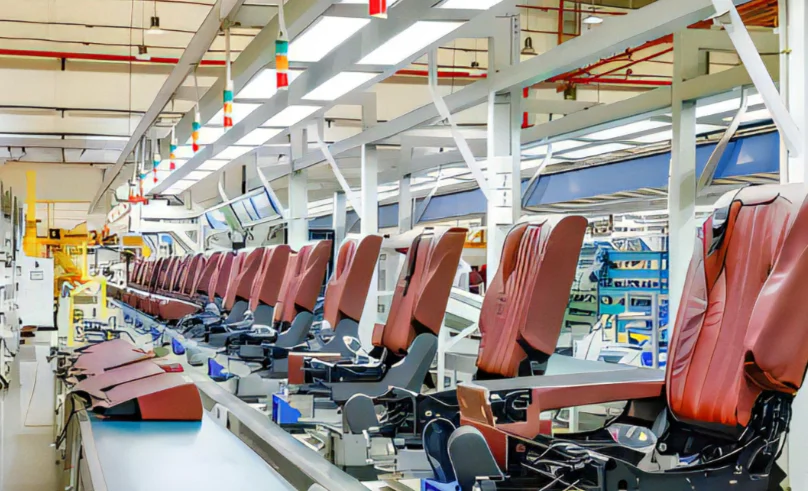
In addition, compared to traditional welding methods, the CMT welding is faster and cooler, so suppliers can use thinner and lighter steels. This may reduce 5%-10% cost without sacrificing the strength.
Testing & Compliance
Safety is the non-negotiable upfront investment in engineering integrity. Every seat design should pass rigorous global standards, like CCC, ECE, FMVSS, etc. The prototypes have to undergo brutal destructive tests, including crashes and breaking of expensive seats. This ensures that the frame and headrest of the seats provide protection to passengers if crashing. It also means the seat losses need to be allocated to the cost of seat produced during mass production.
The entire process of manufacturing is to be carried out based on the IATF and ISO management system. Though it increases management cost in the early stages, it significantly decreases recall risk and defect rate. Yunzee is fully certified and is in compliance with the IATF and ISO management systems to ensure that all produced seats are at the highest level of quality.
Delivery & Logistics
The bulky and heavy auto seat can’t be compressed. Shipping a fully assembled seat requires expensive and heavy-duty protective crating to ensure the transit damage rate is near zero. Efficient manufacturers may set their assembly plants near the vehicle lines to avoid transit risks and additional costs.
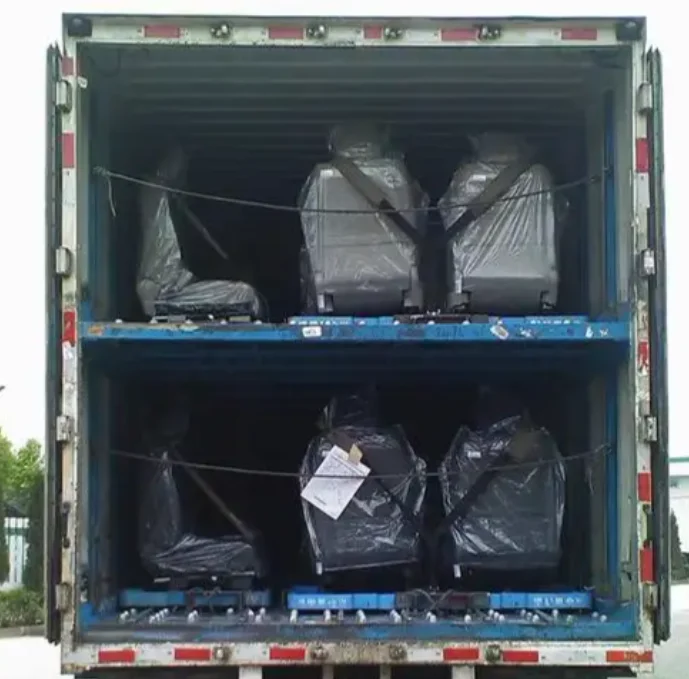
Moreover, some innovative suppliers attempt to use SKD (Semi-Knocked Down) shipping for the international market. This is to assemble the seat in the target country with the delivered seat structures. Such a delivery method optimizes space up to 2 or 3 times, saving almost 50% or more cost for the freight fee.
YUNZEE Auto Car Seat Solutions
Yunzee, a top-tier global manufacturer, is a leading provider of high-performance automotive seat manufacturing for global clients. We offer unparalleled customization options with various premium materials, including luxurious Nappa leather or synthetic materials. We also offer premium modules like seat heating, ventilation sensors, pneumatic massage, smart screens, wireless charging, etc. By leveraging vertical integration and professional manufacturing, Yunzee optimize the car seat cost without compromising the aesthetic and ergonomic integrity.
FAQs
Q: Why is the cost of the car seat for electric vehicles so high?
This is because electric vehicles highlights lightweight, so they require materials like aluminum and magnesium to counterbalance the weight of the battery in the vehicle. Besides, they also require more smart devices to promote high-tech features.
Q: How do I reduce the auto seat cost for a bulk order?
The best way to reduce the cost is through ‘Tooling Amortization.’ This is because, as the order increases in bulk, it is easier to amortize the cost of ‘Tooling and R&D,’ resulting in a significantly reduced cost for the auto seat.
Q: Does the cost increase when using eco-friendly materials?
Yes, it currently does because using eco-friendly materials costs more than using other materials, though this cost is reducing as more people look to buy eco-friendly products.
Key Takeaways
- The three main components of seat cost are materials, electronics, and hidden overheads.
- Material utilization in upholstery (e.g., 90% for PU vs. 60% for leather) plays a major role in determining the ultimate cost of an automobile seat.
- R&D and testing are essential for both legal compliance and brand reputation, thus they cannot be neglected.
- Investing in aluminum or HSS alloys can increase EV range and offset battery costs by reducing structural weight by 20% to 30%.
- You may mix and match modular elements to get the pricing you want without sacrificing ergonomic integrity with a vertically integrated partner like YUNZEE.
Auto Seats Products


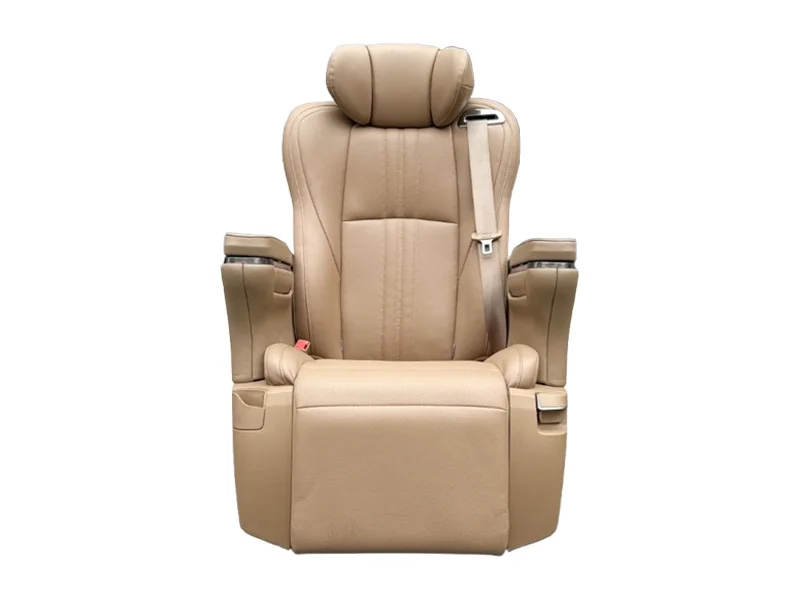


- Toyota Sienna Luxury Modification with Aviation Seats: A Premium Business MPV Upgrade
- Buick GL8 Luxury Modification: Creating a Premium Business Class Interior with Aviation Seats
- Toyota Alphard Luxury Modification: From Fairytale Dream to Executive Business Lounge
- Toyota Coaster Luxury Bus Modification: VIP Aviation Seats and Premium Interior Upgrade
- Land Rover Modification: Comprehensive Upgrade of Red Seats and Interior