
Car seat testing is a comprehensive evaluation process designed to ensure passenger safety, ergonomic comfort, and long-term durability. By rigorously testing structural integrity, crash resistance, material safety, and electrical functions, manufacturers guarantee that seats provide a comfortable ride during daily use and critical life-saving protection during collisions.
Table of Contents
A test of a car seat is necessary to evaluate the safety, comfort, and durability of a car seat. Since the cab of the car is a vital part, the seat is used not only to make the cab comfortable for the end user and the user of the cab inside the car, but also for the safety of the car, especially in the case of an accident or injury, i.e. a collision. That’s why car seats are tested. Testing is much better than a single tool. Testing looks at physical characteristics, safety or ergonomic characteristics, long-term durability, and more. In this article, we will discuss the main content and testing of car seat steps.
Primary Testing Protocols for Car Seats
1. Car Seat Strength Testing
The structural strength of the seat is directly related to the safety of the passengers in the event of vehicle collision, especially the resistance of the seat frame and adjustment mechanism.
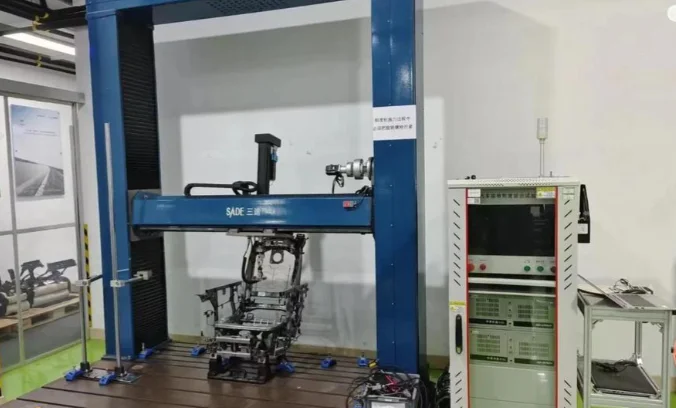
- Static Strength Testing: By applying a static load, the force exerted on the seat in the event of a vehicle collision is simulated. During the test, certain vertical, horizontal, and rear loads are applied to detect the deformation or failure of the seat skeleton, slide rail and adjustment mechanism.
- Dynamic Strength Testing: This type of test simulates what a real type of collision, or sudden braking, that produces a real time reaction of the vehicle on the subject body is the impact strength of a seat. To characterize impact resistance to a crash, crash test beds have beeen widely used to accelerate or decelerate the seat.
2. Seatbelt and Headrest Testing
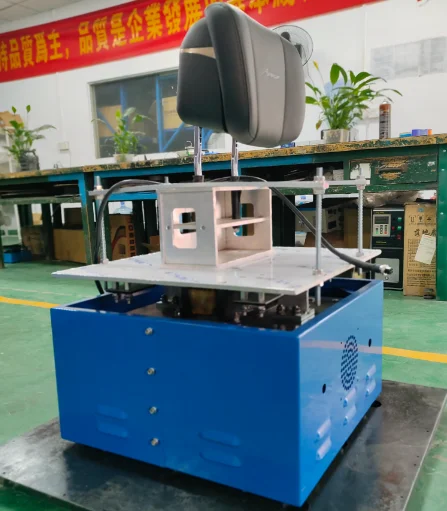
The buckling positions of headrest design and the harness must be in accordance with stringent safety regulations in order to operate at a functional level during a crash.
- Seatbelt Anchorage Testing: Tests the strength and stability of the seat belt fixing point to ensure that it can withstand the tremendous forces generated during the collision and maintain integrity.
- Headrest Performance Testing: Neck-injury prevention should be the result of a headrest for rear-end collisions. Traits of headrest would be in a strong posture, headrest adjustable, buckle supports cranial and neck.
3. Auto Seat Comfort and Ergonomics Testing
Seat comfort not only affects the ride experience of the driver and passenger, but is also closely related to the fatigue of long driving. Comfort testing generally includes the following:
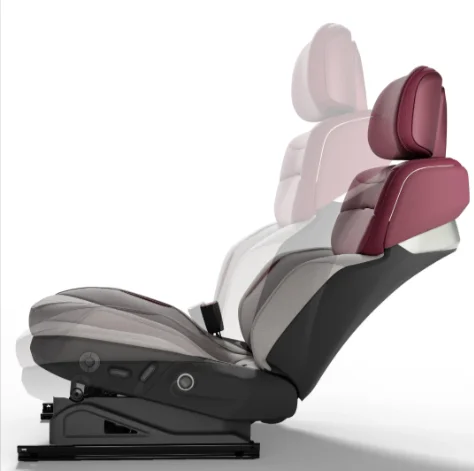
- Seat Contour and Support Testing: Measures the shape, padding hardness and elasticity of the seat to ensure that the seat can effectively support the waist, back and thighs of the occupants and reduce driving fatigue.
- Seat Adjustment Functionality Testing: Evaluates the adjustment function of the seat, including front and rear, up and down, tilt angle adjustments, etc., so as to ensure that the seat can meet the use needs of different occupants, especially the posture adjustment during long-term driving.
- Temperature and Ventilation Testing: Detects whether the function of the seat heating and ventilation system is effective, especially the comfort level in cold or hot environments.
4. Durability Testing
Seats are subject to constant wear and shock during long-term use, so their durability is crucial to the quality and user experience of the whole vehicle.
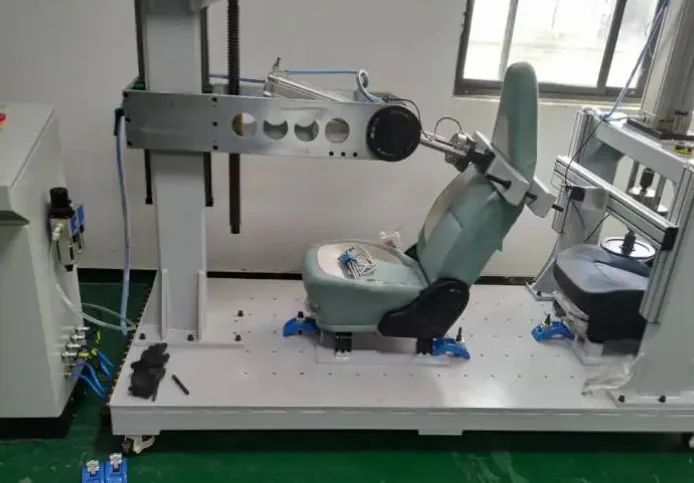
- Fatigue Testing: The fatigue tolerance of seat surface materials and skeleton is detected by simulating the movements of occupants entering and exiting the seat, sitting down and getting up by repeated loading. Common detection methods include seat cushion fatigue test and backrest fatigue test, in which repeated loads are applied to the seat cushion and backrest respectively until structural damage or material wear is detected.
- Material Abrasion and Anti-Aging Testing: Tests the wear resistance, tear resistance and anti-aging ability of seat surface materials (e.g. leather, fabric). The test is usually carried out by a friction tester to rub the material for a long time, and the aging test is carried out under different temperature and humidity conditions.
- Stain Resistance Testing: Conduct stain resistance test on the surface material of the seat, simulate the pollution in actual use, and test its easy cleaning degree and stain resistance ability.
5. Crash Testing
Car seat crash testing aims to evaluate the ability of a seat to protect passengers in the event of a vehicle crash. Typically, such tests are conducted by simulating the process of a crash, evaluating the strength, deformation, and restraining effect of the seat on the passenger.
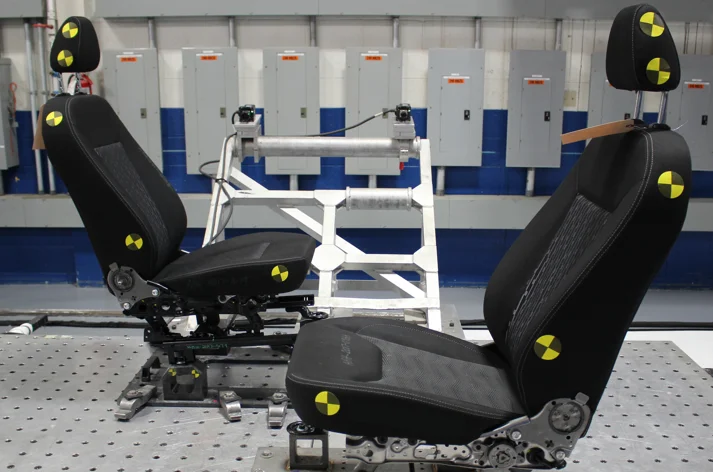
- Frontal Impact Testing: The seat and seat belt work together to detect the ability of the seat to protect occupants during the simulated frontal collision. This help ensures that the seat can maintain integrity and effectively protect occupants.
- Side Impact Testing: Evaluates the side protection effect of the seat on the passenger by simulating side impacts, especially the wing support and the variation of the spacing between the seat and the door.
6. Child Seat Anchorage System Testing
Global specifications require standard child seat securing systems, such as ISOFIX, and LATCH, to be standardized in the vehicle. The following is the protocol in general for testing:
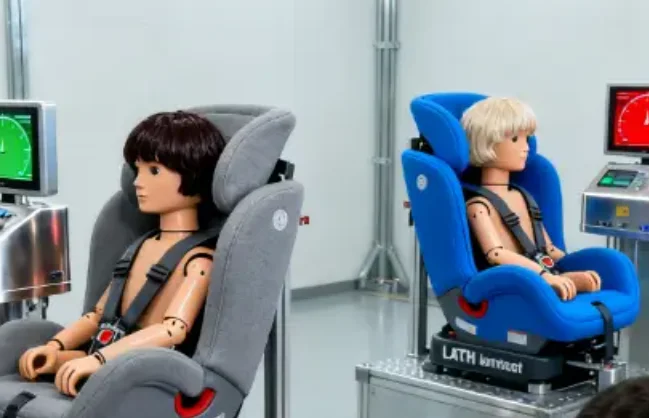
- Fixation Point Strength: Evaluate the strength of the child seat fixation point by tensile testing to ensure that it does not fail in the event of a crash.
- Ease of Use Test: Assess whether the child seat is quick and easy to install and ergonomically designed to ensure that the child seat can be quickly removed in an emergency.
Testing Car Seat Materials
The performance of the seat material directly affects the comfort, durability, and safety of the seat. Common material testing items include:
- Material Flame Retardancy Testing: Car seat materials should have certain flame retardancy properties to avoid accelerating the spread of fire in case of a fire. Through the combustion test, the flame retardant effect of the seat material is tested.
- Detection of Harmful Substances: Detect the seat material for harmful substances to ensure that it does not contain chemicals harmful to human body, such as volatile organic compounds (VOCs), heavy metals, etc.
- UV Resistance and Thermal Stability Testing: The seat material must be able to withstand high temperature and long-term exposure to UV rays, so it is tested for weather resistance to detect the performance changes of the material under different temperature and light conditions.
Car Seat Electrical Functionality Testing
For modern upscale car seats, a variety of electrical features are usually equipped, such as seat heating, ventilation, massage, as well as electric adjustment. The detection of electrical functions mainly includes:
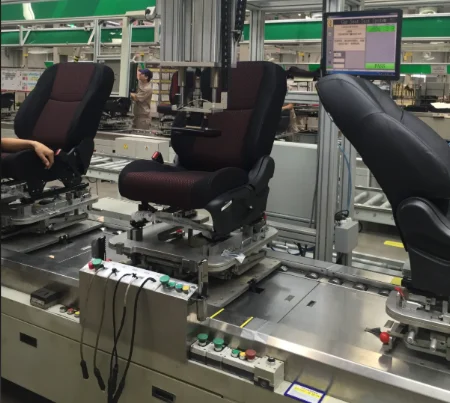
- Heating and Ventilation Function Testing: Response time, temperature variation interval, heating distribution, uniformity of all classifications of the system must be tested to obtain application performance.
- Power Adjustment Function Testing: Checks the operating smoothness, response time, operating distance, life and reliability of the power regulation system.
- Electrical Safety Testing: Including short circuit, overload and protection rating (IP rating) testing to ensure the safety of the seat electrical system.
Car seat testing is an important link to ensure vehicle safety, comfort and durability. It involves many aspects such as physical strength, ergonomics, material properties and electrical functions. Through systematic seat detection, the quality of seats can be effectively improved, and the comfort and safety of passengers can be ensured. With the increasingly fierce competition in the automobile industry, the quality inspection and innovative design of seats have become an important means to improve the quality of vehicles.
Key Takeaways
1. Structural Strength & Crashworthiness
- Static & Dynamic Testing: Seats undergo static loads to test frame deformation and dynamic crash simulations to ensure the adjustment mechanisms and rails hold up under impact.
- Safety Restraints: Focuses on the strength of seatbelt anchorages and the ability of headrests to prevent whiplash during rear-end collisions.
- Impact Evaluation: Specific protocols for frontal and side impacts assess how well the seat maintains its integrity and shields the occupant.
2. Ergonomics & User Experience
- Postural Support: Evaluates contour, padding hardness, and elasticity to reduce driver fatigue by supporting the waist, back, and thighs.
- Adjustability: Ensures that manual and power adjustments (recline, height, etc.) are smooth and functional for diverse body types.
- Climate Control: Tests the efficiency and uniformity of heating and ventilation systems.
3. Durability & Material Integrity
- Fatigue Resistance: Simulates thousands of cycles of “ingress and egress” (getting in and out) to check for structural wear.
- Abrasion & Aging: Tests how fabrics and leathers stand up to long-term friction, UV exposure, and temperature fluctuations.
- Chemical Safety: Ensures materials are flame retardant and free from harmful substances like VOCs (Volatile Organic Compounds) or heavy metals.
4. Specialized Systems
Electrical Reliability: High-end seats are tested for circuit safety (short-circuit/overload), massage function reliability, and waterproof ratings (IP ratings).
Child Safety (ISOFIX/LATCH): Rigorous testing of child seat fixation points for tensile strength and ease of use in emergencies.